Since the sad demise of the TQN-aut label, my CURSUS album is now free to download!
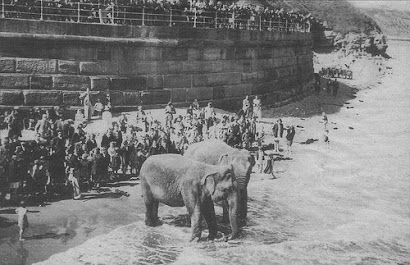
ELEPHANTS ON WHITBY BEACH
Tuesday, 20 September 2022
Sunday, 27 December 2020
THE BORGHESE GLADIATOR
![]() |
| The Whitby Gladiator (photo by John Sewell) |
The Borghese Gladiator is a Hellenistic sculpture which is currently on display in the Louvre, Paris. It was created in Ephesus about 100BC and is signed on the pedestal by Agasias, son of Dositheus. It was found in the ruins of Nero’s seaside palace in the area now known as Anzio, south of Rome, sometime before 1611 during excavations instigated by Cardinal Scipione Borghese .
Misnamed a
gladiator (it is considered to actually be a swordsman engaging with a mounted
opponent) it was widely copied by sculptors in the eighteenth century. It also appears
in many works of pictorial art, such as Joseph Wright of Derby’s Three Persons Viewing the Gladiator by
Candlelight (1765).
![]() |
| Three Persons Viewing the Gladiator by Candlelight (1765) |
Whitby Abbey
was the property of the Cholmley family from 1539 to 1857 and they resided in
the abbot’s lodgings, south west of the abbey church. The north range of the
house was built between 1671 and 1674 by the fourth baronet Sir Hugh Cholmley
(1632 – 89).
When Leeds
antiquarian Ralph Thoresby visited in 1682 he described the hall as being built
‘of freestone, with large courts and
walks with iron grates, and a curious statue in solid brass as large as life in
the midst of the square.’
In His 1779
History of Whitby Lionel Charlton says of Sir Hugh ‘He built up all the N. side of the Mansion-house at Whitby, in the
complete manner wherein it still remains with the statue of a gladiator on the
N. side thereof.’
![]() |
| Hubert Le Sueur's Gladiator, Windsor |
When the
area was excavated between 1998 and 2002 the remains of an almost complete
cobbled yard were uncovered in front of the north range. At the centre of the
yard was a masonry feature suggesting a plinth. Also set in the east wall
midway along its length is a pedestal of local stone, the setting of which, in
relation to the surrounding stonework of the wall itself, suggests that this
was not its intended location.
The statue that now stands at the centre of the courtyard was made by Rupert Harris Conservation Ltd. and commissioned by English Heritage. It was cast from the 17th century copy by Hubert Le Sueur (1580 – 1658), which is on display at Windsor. A stone pedestal was also created by York masons based on the one set in the east wall of the courtyard. The Whitby Gladiator was unveiled in 2009.
![]() |
| Recreation - Rupert Harris Conservation Ltd. |
Saturday, 5 September 2020
IRON HENRY
Gareth S. Brown: I'd had other solo releases doing noise stuff before Hood split up. I'd been doing this project for a few years before the split though, so I always thought of it as more of a side project.
Popwatch: Is Hood officially no more, or is it just temporarily inactive?
GSB: I think it's technically still a hiatus with Hood, although I can't imagine in a million years that we'll ever do anything together again. Most of us are still close (in fact I'm going to Chris Adams' stag do this very evening) but we have very different lives now.
PW: Are you sometimes involved with The Declining Winter?
GSB: That's right. I sort of occupy a 'general utility man' role for Richard Adams' musical endeavours. I play in Memory Drawings too, which is his other thing with American dulicmer player Joel. I'm occasionally roped in to play on recordings but by and large it's a question of helping to make those things work in a live context.
CABINETS AND TOYS
GSB: I did, but I actually have very few memories of it from childhood. I grew up just outside Leeds, so Whitby was often the first choice for trips to the seaside. As an adult I started going back over reasonably regularly and when I 'rediscovered' the museum I wasn't even sure I'd ever been there before, until I went in and was hit with that sense of familiarity. I can now picture myself there as a child, but it's one of those spaces that brings that sort of child-like wonder out, so it's possible some of my memories are products of my imagination.
PW: I think the sense of wonder is apparent in Iron Henry. Some of the instruments even sound like toys. Little bells etc.
GSB: Yeah. That's partly because I have a real love of toy instruments. I had quite a few as a child and definitely used to spend a lot of quality time with the pots and pans in the kitchen. I think there's something about the lack of range or the lack of options with toy instruments that helps to bring out more creative solutions - a river flows fastest at its narrowest point etc.Partly though, I must admit, it's a pragmattic response to the fact that sythesised or sampled versions of toy instruments tend to sound way better than the aproximaitons of 'proper' instruments do.
PW: Yes. I think that sadly a lot of musicians lose that sense of playfulness and become kind of wedded to a mature mindset.The tunes reference the cabinets in the museum specifically don't they? I remember the one with the coral in. I'm from Sheffield and I loved Whitby as a kid, particularly the rocks, the rockpools and the museum.
There's a track about the Sea Bishop, for instance. What a strange object that is?
GSB: Yeah. Some of them reference actual exhibits at the museum and some of them are imagined exhibits. So, for example, I don't recall there being any 'Frozen Charlottes' there (which, in case you didn't know are little dolls people used to put in christmas puddings), but the Sea Bishop, The Tempest Prognosticator, and the Hand of Glory are all jewels in Whitby Museum's crown. Yes, the sea bishop is very strange isn't it? I've read of examples in other collections too. I just love the idea of a conspiracy of pranking sailors bringing these things back to shore. Of course it's difficult to say whether they were actually ever received as genuine or whether it was a joke everyone was in on.
PW: It's like the snake's heads they used to carve on ammonites to sell to hapless visitors, claiming them to be fossilized snakes.
GSB: I suppose that one has a whole local myth around it doesn't it? Isn't there a story about St Hilda hurling snakes off the cliff? Seems totally unreasonable, but I imagine she would have been under a lot of stress?
HENRY AND THE FROG PRINCE
GSB: That's right. I'm struggling to remember what the specific significance was, or even if there was one. I enjoy the incongruousness of the character in connection to the rest of the fairy tale though. Obviously in most retellings Iron Henry is entirely absent. If you read the Grimm version it sort of seems like it's probably an amalgamation of two entirely separate folk tales.
PW: From what I've read, he had iron bands round his heart. Not a medical treatment approved of these days.
AUTOMATONS AND GLASS
PW: The composition is a bit like systems music, layers of repeated motifs. This makes it sound dually modern and yet also like an automaton's playing sometimes. I really like that approach.GSB: I'm very drawn to that approach too. Often when I performed that stuff and other things from the same project live I'd get people telling me (not in an unkind way), how much it would be improved by being played by some sort of chamber ensemble, but that mechanical aspect, the idea of setting something off going and then just leaving it, and adding more stuff on the top that you can also just set off and leave, was always really central for me. Again there's a clear link with toy instruments. The whole project was quite consciously influenced by things like Reich and early Glass.
PW: Audiences tend to have a band that plays every note in real time mentally fixed as a default setting I think, but making the mechanical repetition obvious is part of Iron Henry's charm. The way it sounds like a machine, a machine from the age of the Tempest Prognosticator.
GSB: That's very kind of you. It's a funny balance with the live/non-live thing. On the one hand I think you're right that the default setting is the band that plays every note. On the other hand, the norm for maybe more dance-based electronic projects is still the laptop set, and often with very little of a live aspect to it.
I kind of felt like I was stuck in a bit of a grey zone between the two, where people would perhaps associate me more closely with the former whilst I had a technical set-up more closely associated with the latter. I would tend to play sets that were half pre-recorded, but with stuff played live over the top. I'm not sure anyone (including me) was ever truly satisfied with it.
TAPE AND TREES
PW: Sounds very interesting, except I don't have a cassette player. I should get one. lots of good stuff gets released on that format these days.
GSB: Yeah, I'm slightly worried that cassettes are only for hipsters nowadays, but it's true that there's a lot of good stuff coming out. I'm pretty free and easy with CDRs and MP3s though, and it's hard to make a case that someone without a cassette player not buying a cassette is a missed sale. Maybe the thing to do would be to release a tape with a download code.
PW: I remember the culture of passing tapes around in Whitby in the 80s. Local bands you could play in the car, until the tape all got chewed up and you had to hang it from a tree. Remember all that tape hanging from branches?
GSB: I was pretty immersed in the noise and improv tape scene in the late nineties. I do miss it a bit. Cassettes sound great.
PW: They did, and indeed still do, but the hipsterness might wear off. Mind you some CDRs I've had for a while are unplayable now. The digital info on them has vanished.
GSB: I agree. I have a number of commerically pressed CDs about which the same is true. I'm pretty sure CDs were just a big con.
PW: Vinyl seems to be the one.
GSB: Always.
The Declining Winter
Memory Drawings
Saturday, 24 November 2018
THE HAND OF GLORY
This story, which begins in Yorkshire in 1824, features the Hand of Glory and it's associated rhyme. It was pencilled and inked (rather idiosyncratically) by Matt Fox and appeared in the American comic Chilling Tales #13 published in 1952.
Click on the images to enlarge them.
Sunday, 29 October 2017
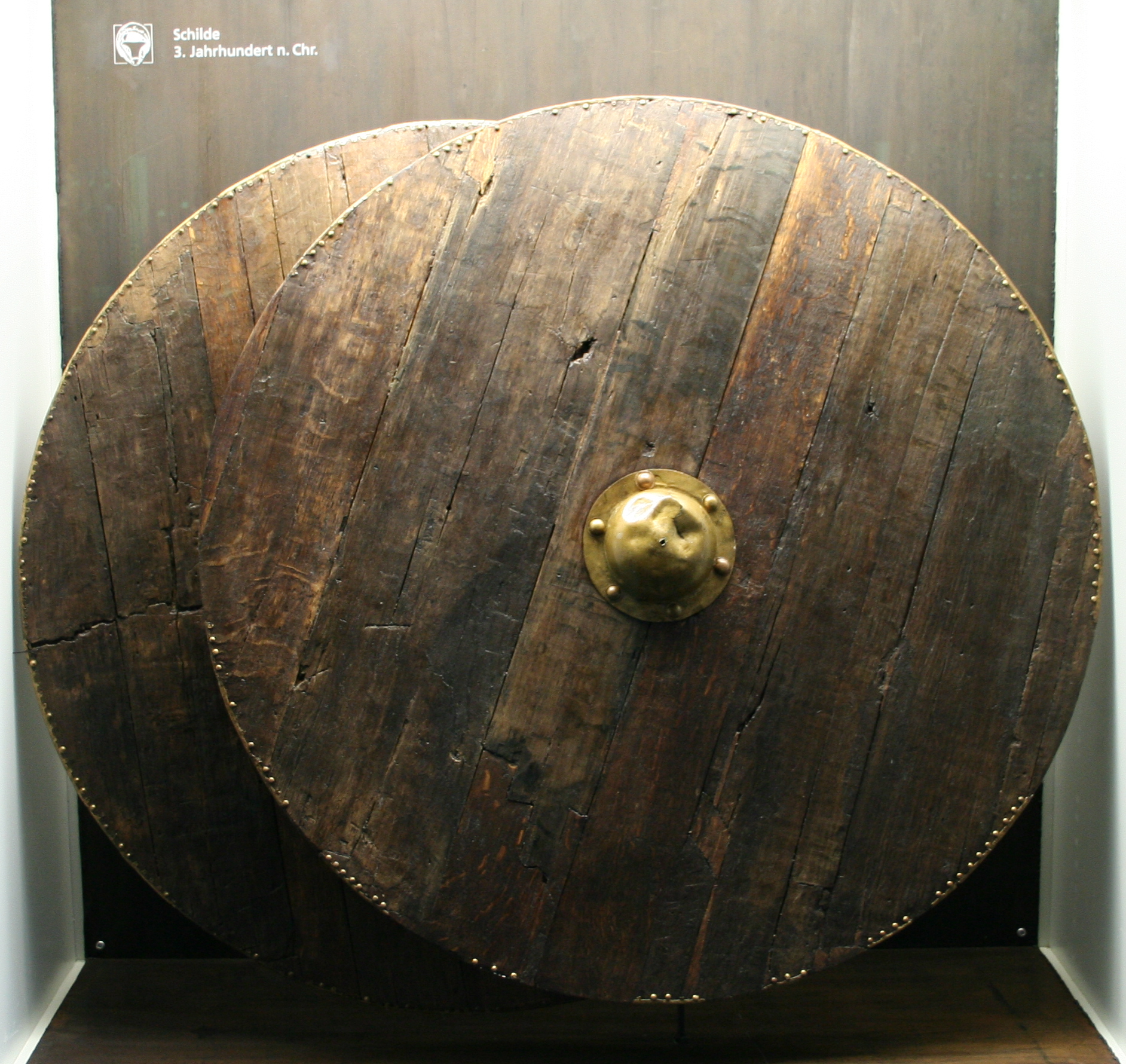
SKELDER: THE SHIELD HILL OF WHITBY
By CHRIS CORNER.
Click on the pictures for larger versions.
![]() |
| Skelder, August 2016. Looking west from Green Lane allotments, Whitby |
Nowadays, on sunny mornings Skelder often wears a glinting necklace of bumper-to-bumper tourist traffic, snaking slowly downhill. By evening streams of red tail lights crawl back up and over it. However, even now a dusting of snow can reduce traffic. A resident returning home across the moors sees the welcome landscape of the abbey and the red-roofed town huddled far below in isolation on the sea's edge. Like an astronaut getting misty-eyed from seeing the 'blue marble' that is Earth - from Skelder one's friends, family and foes can be imagined going about their business in Skelder's shadow.
It brings to mind the description of the view that greeted Grendel, the monster from the Anglo-Saxon epic poem, Beowulf, as he skulked high on the moor's edge, looking down malevolently on Heorot.
![]() |
| Text from Seamus Heaney's Beowulf: A New Translation. Painting by me, (oil) 2017. |
![]() |
| Looking east towards Whitby Abbey from on top of Swarth Howe. October 2017. |
Clearly, Skelder's gigantic size and shield-like shape would make it a key landmark familiar to ancient townspeople and passing seafarers. When viewed from Whitby, Swarth Howe, the boss, appears to sit on a landscaped terrace, or platform, similar to Danby Beacon. Seen from Skelder Road, west of Newholm, this stepped summit, facing Whitby Abbey, looks remarkably symmetrical, although the forest and gorse hides a lot of the land's contours. Skelder is a 'node' (thanks Gavin) that dominates the Whitby area's skyline and is visible through 360 degrees from land and sea. Photographs rarely do justice to its weighty presence in the landscape, the lens seems to diminish it. Skelder is a shield but sometimes an unpredictable and inconvenient obstacle. Long before GPS and weather forecasting, it was consulted before journeys - a prognosticator. Clouds brush across it and the sun sets behind it in winter. Snow lingers long after the sea salt air has thawed the town a few miles further downhill.
THE STRANGE AND SPOOKY BATTLE OVER BATS AND BLACK DRESSES
Goth has transcended a musical style to become a part of everyday leisure and popular culture. The music’s cultural terrain has been extensively mapped in the first decade of this century. In this paper we examine the phenomenon of the Whitby Goth Weekend, a modern Goth music festival, which has contributed to (and has been altered by) the heritage tourism marketing of Whitby as the holiday resort of Dracula.
We will examine marketing literature and websites that sell Whitby as a spooky town, and suggest that this strategy has driven the success of the Goth festival. We will explore the development of the festival and the politics of its ownership, and its increasing visibility as a mainstream tourist destination for those who want to dress up for the weekend.
Download the full paper and read it by a flickering candle.
PDF of the full paper
Friday, 23 June 2017
STRONGER THAN THE SUN
![]() |
| A walk on the pier |
![]() |
| The phone box |
![]() |
| When will she finish that bloody call? |
![]() |
| Buying a paper |
![]() |
| At the station |
Wednesday, 7 June 2017
ELECTION FEVER!
![]() |
| William Gervase Beckett |
There were two elections in Whitby in close succession in 1905 and 1906. The first was a Parliamentary by-election on 1 June 1905. Two candidates contested the seat. The Conservatives selected William Gervase Beckett, the 39 year old younger brother of the previous MP Ernest Beckett. The reason for the by-election was that Ernest succeeded to Baron Grimthorpe on the death of his uncle on April 29th 1905 and vacated the seat.
The candidate standing against him was Noel Edward Buxton, a 36 year old Liberal with an interest in temperance reform. Unfortunately he fell foul of the Temperance League because of his supposed brewery interests. Despite the Temperance League traditionally supporting the Liberals, they threatened to withdraw their support unless another less controversial candidate was put forward.
![]() |
| Noel Edward Buxton |
This post was prompted by seeing an intriguing drawing of the fish quay at Whitby in Pannett Park gallery. It is by marine artist and member of the Staithes group Joseph Richard Bagshawe (1870-1909). The title added by the gallery says 'Parliamentary Election 1905 - 1906' which doesn't make it clear exactly which election it depicts.
The people of the town certainly weren't shy about showing their allegiances at the time with endorsements for both candidates appearing in the sketch. Most prominent is the 'VOTE FOR BECKETT' lettering on the shed roof and on the passing boat. The 'VOTE FOR BUXTON' sign is less clear and right on the other side of the harbour. Whether this represents Bagshawe's own political bias is open to interpretation.
Click on the picture to enlarge it.
LINKS:
Tuesday, 6 June 2017
FRESHWATER PEARL MUSSELS IN THE RIVER ESK
The pearl mussels in the River Esk are the last surviving population in Yorkshire, and only a few mussels are left. The vast majority of the remaining pearl mussels are aged 60 years+, and the mussels in the Esk have not produced young for over 25 years, it is likely that the Esk population will become extinct in the next 40 years unless action is taken to halt this decline. From the North Yorkshire Moors National Park official blog.Some mussels from the Esk have been taken to attempt captive breeding at a Freshwater Biological Association 'ark' in the Lake District. There fertilised female mussels are kept with fish in the hope that encysting of glochidia will take place, after which the mussels are removed to a different tank. The introduction of viable mussels back into their host rivers is the projected end result of this work. Of course this will only be possible if the water quality and substrate are suitable.
Further information is available from the links below.
The River Esk Pearl Mussel and Salmon Recovery Project
The Freshwater Biological Association Pearl Mussel Project
Pearl Mussel Videos from Lousie Lavictoire
Thursday, 28 July 2016
LOUIS TRACY
Louis Tracy (1863 - 1928) was a newspaper journalist and a very prolific author. He was reputedly born in Liverpool (although that is disputed by Steve Holland in his Bear Alley blog) but lived a significant part of his life in Whitby. The census records for 1901 show that his son, Thomas resided at 23 Skinner Street, Whitby. Tracy himself gave his address in 1911 as Fairlawn, Whitby, Yorkshire.
He often collaborated with M. P. Shiel, author of The Purple Cloud, with whom he sometimes shared the pseudonyms Gordon Holmes and Robert Fraser.
The Shiel scholar John D. Squires has written a long article on Louis Tracy here. In August 2012 Mr Squires promised to furnish me with material about Tracy's life in Whitby, but he sadly died in November of that same year before any correspondence could take place. His message to me read:
I have info on Tracy's life in Whitby, including an (unfortunately) poor quality image of his home showing shell damage from the German cruiser raid. If you want to use on your blog, contact me.
This moving obituary to Tracy appeared in the October 1928 edition of The Bookman, the literary magazine.
He was turned fifty in 1914, but promptly took a hand in forming the Whitby Branch of the North Riding Volunteer Reserve, and in 1915 was made sub-commander of the regiment. He wrote much on the War, went lecturing on it in America in 1916, and in 1917 joined the Headquarters Staff of the British Mission in the U.S.A., and later was temporarily attached to the Foreign Office. For these and other war services he was made a C.B.E. in 1920.
For six years most of his literary work was suspended, and at fifty eight he had to take up the dropped threads and begin again, and did not find the way easy after that interval, but wrote thirteen more novels in the last seven years, and regained his public, though he could not regain the strength he had lost. By a strange coincidence he died on August 13th, leaving unfinished a story called The Fatal Thirteen, of which he had written only thirteen pages.
LINKS
A comprehensive bibliography of Tracy's work
Bear Alley
John D. Squires