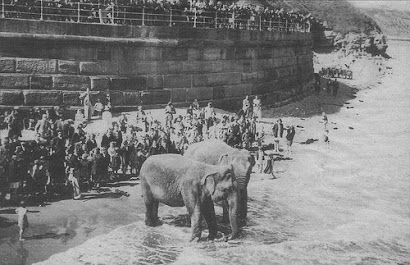
ELEPHANTS ON WHITBY BEACH

ELEPHANTS ON WHITBY BEACH

Tuesday, 23 June 2009

FABLES OF THE RECONSTRUCTION: 23:06:09

'My building has every convenience,
It's going to make life easy for me,
It's going to be easy to get things done there,
I can relax along with my loved ones.'
Don't Worry about The Government by Talking Heads - 1977


' I love to go to the playground
and watch the kids jumping around.
They don't know I'm firing blanks.'
Emo Phillips

'And out of the ground made the Lord God to grow
every tree that is pleasant to the sight, and good for food;
the tree of life also in the midst of the garden,
and the tree of knowledge of good and evil.'
Genesis: Chapter2, Verse 9


We're standing here,
Exposing ourselves,
We are Showroom Dummies,
We are Showroom dummies.'
Showroom Dummies by Kraftwerk - 1977

'Where there is a virgin piece of ground to work upon,where the canvas is clear,
and where the designer may inscribe upon it
any picture that he pleases,
the opportunity for constructing an up-to-date
and beautiful garden
should be seized with avidity'
F. Hadfield Farthing - 1929


' The quay of the haven of the town [which is] much decayed and broken down,
to the great peril and damage
as well of alien merchants
as of denizens wishing to arrive and rest in that port with their ships
and also of the burgesses dwelling in the town
wanting to pass.'
From a grant of quayage dated 1411


Whitby Woolworth's number on closure list - 196
Members of staff losing jobs - 26
Closure date - 27.12.08
Final closure date for all Woolworth's shops - 05.01.09
Figures from Whitby Gazette

'This Pannet Park
belongs to the people of Whitby
not Scarborough Councillors' Quango Committee.
Who stole our trees? '
Unknown writer - On a sign in Pannet Park

Sunday, 21 June 2009

WHITBY WORDS OF 1855

Francis Kildale Robinson was born in London in 1809, but he was not destined to live in the capital all his life. He became a resident of Whitby, and for a period of time he worked at a chemist's shop in Baxtergate.
...
He became fascinated by the local accent and the dialect words and idioms that cropped up in customers' conversations all the time.
...
Describing himself as an antiquary and topographer, he published several books such as the snappily titled 'Whitby: Its Abbey, and the Principal Parts of the Neighbourhood; or a Sketch of the Place in its Former History and Present State, with the Topography and Antiquities of the Surrounding Country', published by S. Reed in 1860.
...
He is best known however for a different publication; ' A Glossary of Yorkshire Words and Phrases Collected in Whitby and the Neighbourhood'.
...
Published in 1855 by John Russell of London, it is a dictionary of a forgotten vocabulary that developed in this isolated community cut off by the moors and the sea. 'In recluse districts we may expect to find the greatest number of genuine provincialisms — of Ancient Vocal Sounds' he wrote.
...
As an example, if you're suffering from the kincough, or hooping cough as it became known, try this; 'It is the practice to put a live hairyworm into a small bag, which is hung round the neck of the patient, and as it decomposes, the cough will decrease.'
...
The whole of this book can be read online by clicking here, or you can download the entire book to your computer by clicking here and saving one of the file formats. I think the PDF is best for regular usage.
...
Francis Kildale Robinson died in Whitby on January 6th, 1882.
...
Click on the pages and they'll enlarge in your browser so you can actually read them!

BAGDALE 1905


A leafy looking Bagdale from an old postcard sent on the 14th November 1905. Bagdale Hall is on the left. Apparently Bagdale Beck, now running underneath the road, was navigable as far as the cart (or possibly an early car) in the distance at one point.

Sunday, 7 June 2009

RAVENSCAR TUNNEL

During the building of the Whitby to Scarborough railway, the landlord of Raven Hall was a gentleman called W. H. Hammond. Not wanting the unsightly spectacle of a railway crossing his land, he insisted that a tunnel was cut to take the locomotives and their passengers below ground.

Work on an earlier tunnel was never finished. It came to a halt in 1876 because it was considered to be on the wrong alignment, making this the second attempt. W. H. Hammond died in 1885, which meant he just managed to hang on long enough to see his tunnel in operation.

Due to the geology of the landscape, the Whitby to Scarborough line was very expensive to build, the cost being estimated at £27,000 per mile. A huge amount in 1885. In the 1930s plans to blast the tunnel roof off, because trains failing to make the 1 in 39 gradient up to Ravenscar were becoming stranded in the darkness, never came to fruition.

Entry into the southern end of the tunnel requires scrambling down a steep bank and negotiating thick undergrowth and marshy ground. The entrance has been bricked up, although access can be obtained through a small door in the wall.

This is a video made from a series of photographs taken in the tunnel. The tight bend in the track can clearly be seen as the stonework curves off into darkness. The sound recording was made by placing stereo condenser microphones deep inside the structure as water filtered through the brick ceiling and fell to the earth below.

Friday, 5 June 2009

WINCH PRACTICE


On Wednesday afternoon a cruise ship, the Saga Ruby, appeared on the horizon and steamed towards Whitby. As it neared the Bell Buoy a yellow Sea King helicopter from RAF Leconfield appeared. Apparently it was returning from an exercise and used the cruise ship to practice a winch rescue.


Saturday, 30 May 2009

WHITBY PIERS


It seems that around the end of the 17th century the piers were in a similar poor state of repair as they are today. Robert Tate Gaskin, author of The Old Seaport of Whitby (1909), writes, "On the 8th of December 1696 a petition from Whitby was presented to the House of Commons and read. It set forth that Whitby Harbour was one of the most commodious in the north of England, being capable of receiving 500 sail of ships." He goes on to quote from the House of Commons journals, " ..the ancient piers being much decayed the mouth of the harbour being almost choked up, and in danger of being quite stopped up unless the piers be repaired."

A bill was eventually carried by Royal Assent on May 6, 1702 amid protest and initial refusals of help. Duties were imposed by the Trustees of the town (Gideon Meggison, Ralph Boyes and Henry Linskill) upon shipping using the port, a tax towards the upkeep and reconstruction of the harbour. This period coincided with an upturn in prosperity in the town due to the increase in whaling and the coastal collier trade between the Tyne and the Thames. Colliers needed a safe haven between the Tees and the Humber in the event of storms and this would have been a strong case in Whitby’s favour regarding funding for new harbour works.

Young writes, in his History of Whitby (1816), "The act of 1812 particularily authorises the repairing of the east pier, which is now enlarging on the outside, in the same durable form as the west pier, to the breadth of 15 yards. This pier, which is about 215 yards long forms the grand barrier to protect our town from the fury of the German ocean, which often breaks over it with great violence."


The west pier was almost wholly rebuilt by Mr Francis Pickernell, the engineer of the Harbour Trustees. It was completed on Christmas Eve, 1814, being built with stone from nearby Aislaby Quarry. Pickernell also designed the west pier lighthouse with its fluted Grecian column. This was completed in just 11 weeks in October 1831. The Acts passed to finance all this work were eventually repealed by 1861, considerably longer than the initial period of 9 years agreed in 1702. In the words of George Young this building activity resulted in, "..an admirable piece of workmanship, which may vie with any pier in the kingdom, either for strength or beauty." Francis Pickernell died in September 1871. By this time Whitby possessed much of the fine stone built harbour we see today.


The harbour entrance was once the 'front door' of Whitby, the sea for centuries being the town's main means of communication with the outside world. The imposing aspect of our piers and lighthouses is best appreciated when approaching from the sea.

C. Corner

Tuesday, 26 May 2009

HEMPSYKE FONT

Hempsyke is described in the Eskdaleside-with-Ugglebarnby Geographical and Historical Information from the year 1890 as 'an estate near Littlebeck, the property and occasional residence of Henry Harrison Allen, Esq. The house is a neat structure, with verandah in front, erected in 1883-4. Three hundred different kinds of wood, it is said, appear in the floors, walls and ceilings.'


This picture of the fountain featuring the carved head of a lion, from whose mouth the water from a natural spring flows, was taken on Sunday, May 24th 2009. Although not clear in the picture, carved in the stone above the lion's head is the word 'HEMPSYKE'.

Below this are three plaques.

Man made the trough
The water God bestows
Then praise his name
From whom the blessing flows

John Allan
Hempsyke 1856

Weary stranger here you see
An emblem of true charity
Richly my bounty I bestow
Made by a kindly hand to flow
And I have fresh supplies from heaven
For every cup of water given

John Allan
Hempsyke 1858

According to legend, one day in 1864 a passing tramp refreshed himself at the font, possibly using a metal cup attached to a chain to prevent theft, that was often a feature of these roadside oases. He called at the house and arranged for the following plaque to be erected by way of thanks:

The stream is pure as if from heaven it ran
And while I praise the Lord I'll thank the man

Tramp 1864

To find the fountain from Whitby, go through Ruswarp over the bridge. Carry on past Sneaton and take the next turning on the right signposted Littlebeck 2, Sleights 2. Don't turn off towards Ugglebarnby though, follow the lane on in the Littlebeck direction. The font is set in the wall directly by the roadside on the left hand side.

OS map reference NZ8805
Click on the photo of the fountain for a fully detailed instant enlargement

Monday, 25 May 2009

UNDER THE RAINBOW

This picture of a rainbow was taken here in Whitby in mid May over Rose Avenue. The weather had been intermittently showery with quite bright sunny periods punctuating the rain.


The sky within the arc of the rainbow is quite clearly lighter than the sky above the rainbow. This is due to a phenomenon of light refraction through water droplets. The dark sky, especially if it occurs between two rainbows is known as Alexander's Dark Band after Alexander of Afrodisias who first recognised the effect.


It was well known to painters and countryfolk. This painting of 1794 by Joseph Wright of Derby clearly shows the phenomenon. A tribute to the artist's keen observation.

Friday, 22 May 2009

BEACH DEATH HOLOCAUST


If you walk along the beach anywhere from Whitby to Sandsend, you may notice a whitish residue at the high tide line. It looks like some sort of scum that's been washed up by the sea. In actual fact it's made up of millions of tiny crustaceans' bodies. The same thing is being reported from Redcar and Saltburn too.
...
They look like the sandhoppers you normally find on seaweed left high and dry up the beach that jump away as soon as you disturb them, and they are related, but in fact they're hyperiid amphipods, probably of the genus Themisto. Nobody as far as I know has categorically identified them yet though.

These creatures are not normally found on beaches. They live in huge swarms in the open sea, generally in mid water feeding on tiny crutaceans called copepods. As part of the zooplankton amphipods are an important food source for many fish, equivalent to krill.

Interestingly there was another mass stranding of amphipods in 1966, which was also a year when Ray's Bream occurred on the North East coast. Maybe the two things are linked. Possibly the bream are following the swarms of amphipods into northern waters. Of course the real reason for these odd occurences is not known, but the sheer amount of these tiny washed up bodies is quite spectacular.
...


Stay tuned for more news on this riveting topic as it occurs. I mean you wouldn't want to miss any further dead shrimp related developments would you?

Saturday, 16 May 2009

DO THE STRAND

This beautiful silver fish is a Ray's Bream (Brama brama). The picture was taken on the beach at Whitby near the old North Beach Cafe on January 28th this year.

Having seen a perfect specimen the evening before, but not having a camera on me, I decided to make sure I had one the next afternoon.

I could see two crows eagerly pecking away at something on the tideline. They hadn't done too much damage to the body, but they obviously like eyeballs for tea.

This winter Ray's Bream were washed up all along the North East coast right up as far as Scotland. They're normally found off the Atlantic coast of Portugal, Spain and North West Africa, although occasionally they appear in Southern British waters.

It's unlikely to be due to climate change, as every so often this species has an eruption year. 1967 to 1968 was an example. They sweep up around the west of Ireland and into the North Sea. No one seems to know why these fish, normally found in mid water, become stranded as often as they do.


Just to show you how big they are, here's a picture of a man with a moustache holding one. By the expression on his face, its obviously just said something disparaging about his wife.
